US scam crackdown targets more than 800 defendants: what to do if you have been tricked into paying
The Justice Department announced results from its nationwide anti-fraud effort on November 24. Find the right reporting route and practical steps to protect your accounts.
A fraud report is often the first step in an investigation, but a consumer who has just discovered a suspicious payment has a more immediate priority: preventing further losses. New federal enforcement figures highlight the importance of acting quickly.
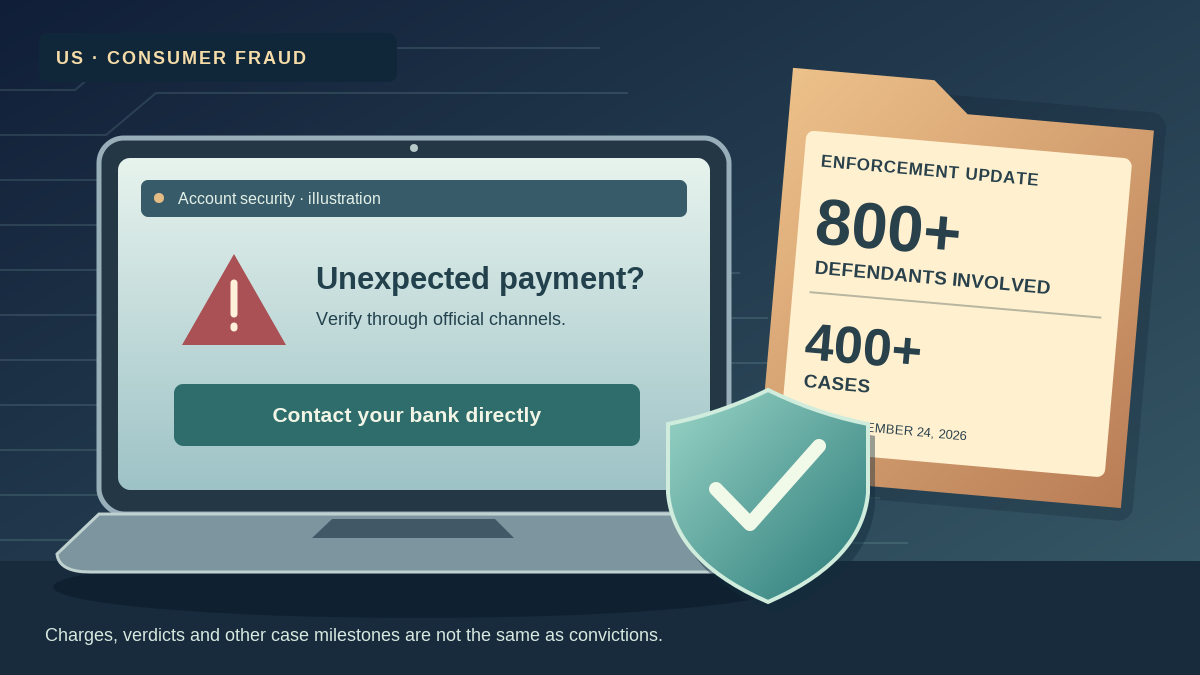
On November 24, 2026, the US Department of Justice announced that prosecutors had made progress in more than 400 cases involving over 800 defendants since March 6. Infosecurity Magazine reported on the results the following day. The effort followed an executive order directing agencies to tackle fraud targeting Americans.
What the numbers measure
Source: Justice Department, November 24 announcement. The categories overlap and cannot be added together.
The announced results include different stages of criminal proceedings, such as new charges, extraditions, verdicts and sentencing. They do not establish that all 800-plus defendants were convicted during the period. Criminal allegations remain allegations unless proven in court.
A common danger: a caller claiming to be an official
Among the cases highlighted by prosecutors is alleged jury-duty impersonation fraud. An unexpected demand for a payment to prevent arrest should not be treated as genuine merely because the caller sounds authoritative. End the conversation and verify any supposed legal obligation independently with the appropriate court or agency. Do not disclose account credentials or send money on the basis of a threat over the phone.
The FBI has separately warned about people impersonating government and law enforcement personnel. A displayed telephone number, familiar agency name or convincing document is not sufficient proof of identity.
Choose your immediate next step
End contact and verify the request through a number or website you already know is genuine. Do not use the contact details supplied in the suspicious message.
General US consumer guidance, not an assessment of your legal rights or a guarantee of recovery. No reports are submitted by this tool, and your selection stays in your browser. If you face immediate physical danger, call 911.
Keep the evidence organized
Preserve transaction receipts, relevant correspondence, account statements and any case numbers in a secure location. Note when you first noticed the problem and when you notified the payment provider. You do not need to continue communicating with a suspected scammer to gather more evidence. Avoid posting personal information or account details publicly.
Contact your financial institution before spending time preparing a lengthy complaint. The FBI's online reporting system accepts reports of cyber-enabled crime, but its FAQ advises people with time-sensitive matters to contact local law enforcement directly. Filing a report does not guarantee that investigators will recover your money.
Watch for a second scam after the first
Once a payment has been lost, someone may approach the victim claiming to be an investigator, lawyer or specialist who can recover the money for an upfront charge. Treat an unsolicited recovery promise as another potential fraud. Verify the identity and credentials of any professional independently before providing information or agreeing to a service.
The FBI's victim resources distinguish criminal restitution from other recovery routes. Even when a court orders restitution, collection and eventual payment depend on the circumstances. Money restrained or seized by authorities should not be confused with money already returned to individual victims.
Talk to family before the holiday rush
Consider agreeing on a simple family rule for unexpected financial emergencies: before sending money based on an urgent message, call the person or institution using a previously verified number. If a relative is supposedly in trouble, contact another trusted family member. A short independent check can be more valuable than trying to judge whether a message sounds convincing.
The federal figures show the scope of the enforcement effort, not the probability that any individual will be scammed. The useful response is to verify unexpected requests, protect account access and know whom to contact if a transaction goes wrong.
Sources & further reading
- Department of Justice — November 24 enforcement update
- Infosecurity Magazine — November 25 coverage
- KMBC — November 24 coverage
- FTC — responding to a scam
- FBI — government impersonation warning
- FBI — account takeover fraud
- FBI — reporting cybercrime and urgent incidents
- FBI — victim resources and recovery scam warnings
AI-assisted, source-based explainer, not firsthand reporting or individualized legal advice. The DOJ announcement was reviewed directly. Independent coverage and FTC/FBI guidance were checked through retrieved extracts; the Infosecurity Magazine full page returned an access error. Case outcomes were not individually reviewed. The response tool is original educational material. See editorial standards for corrections.