Fragrance giants fined £85 million in the UK: what it means for everyday shopping
Three major fragrance suppliers have admitted breaking UK competition law, alongside a separate €471.9 million EU penalty. Here is what the decisions mean for consumers and businesses.
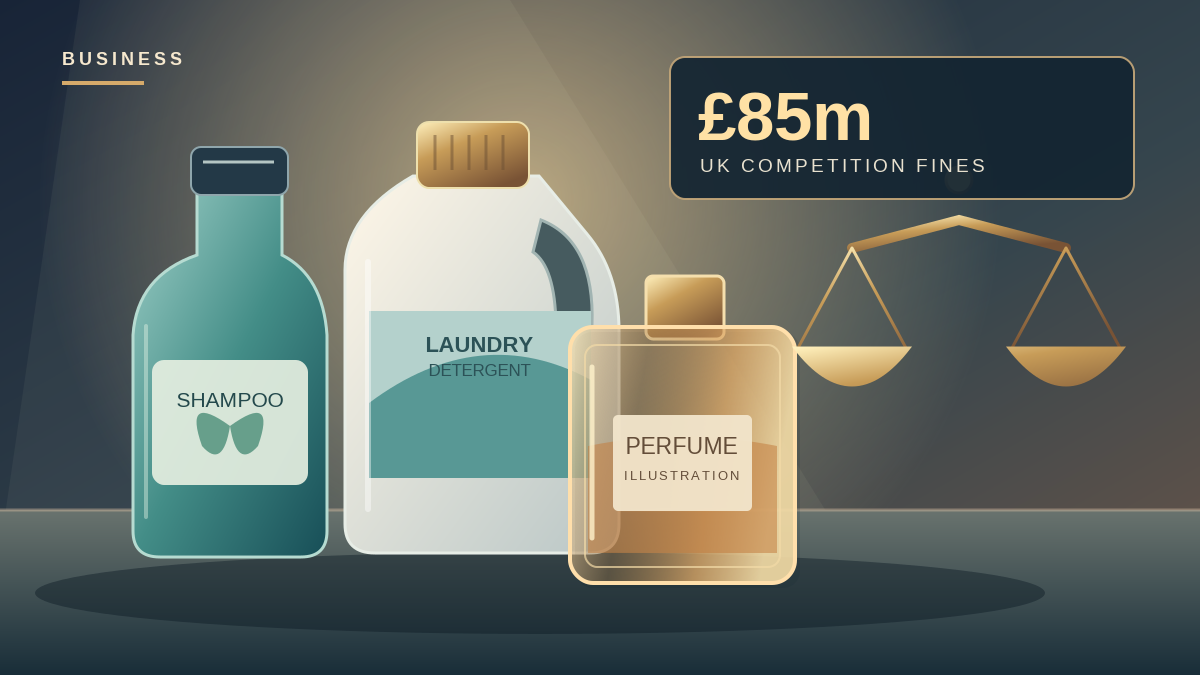
The scent of a bottle of shampoo or laundry detergent is rarely something shoppers associate with a competition investigation. But the companies supplying fragrance ingredients to consumer brands have become the focus of major enforcement decisions in Britain and the European Union.
On 25 November 2026, the UK Competition and Markets Authority (CMA) announced penalties totalling approximately £85 million against Givaudan, Firmenich and International Flavors & Fragrances (IFF). All three admitted violations of UK competition law. Reuters reported that the European Commission imposed separate penalties of €471.9 million on the same suppliers that day.
How much has each supplier been fined?
Source: CMA decision announcement. The individual fines sum to £85.17 million, rounded to £85 million in the regulator's headline. Bars share a zero baseline. EU fines are separate and denominated in euros.
What did the regulator find?
The UK authority found that the three suppliers had coordinated their dealings with Unilever, including responses to requests for lower prices. Their arrangements also restricted recruitment between the teams serving that customer. In addition, the CMA identified wider exchanges of pricing information between Givaudan and IFF.
The companies obtained reductions for cooperation and settlement. The CMA said its decision cannot be appealed by the settling parties. In a company response reported by the Financial Times, dsm-firmenich stressed that its involvement concerned information exchanged about a single customer, disputing the characterisation of its conduct as a price-fixing agreement. That distinction does not alter the fact that the CMA imposed an infringement penalty.
Could it have affected supermarket prices?
Fragrance is an input in products ranging from household cleaners to personal care items and perfume. When competition among ingredient suppliers is weakened, manufacturers may lose opportunities to negotiate better terms. Whether that translates into a higher shelf price depends on the manufacturer's other costs, contracts, margins and the decisions of retailers.
The announcement does not quantify the additional price paid by any particular shopper. Nor does it establish that every scented product was affected. It would therefore be misleading to apply a uniform percentage increase to household shopping bills.
Will shoppers automatically receive compensation?
No consumer repayment programme was announced in the CMA release. A competition penalty is not itself a refund. Any separate compensation claim would depend on its legal basis, evidence of loss and the relevant procedure. The size of a fine alone does not establish the value of a person's claim.
If you encounter a website promising guaranteed payouts from this case in exchange for an upfront fee or sensitive account information, do not treat the announcement as evidence that the offer is genuine. Check official information first. For a normal individual retail dispute, the CMA's general guidance directs people towards appropriate consumer advice organisations rather than offering to resolve the complaint itself.
What can business owners learn from the case?
Competition rules apply to small firms as well as multinationals. Independently choosing your own prices is different from coordinating changes with competitors. Even an informal conversation can create legal risk when it concerns future prices, customers or hiring restrictions. Legitimate cooperation is possible, but businesses should obtain appropriate advice before sharing competitively sensitive information.
Competition-law knowledge check
Choose an answer for each fictional scenario.
Your result will appear here.
Educational examples only, not legal advice or a compliance certification. Answers are processed locally and not transmitted.
The CMA has a dedicated reporting service for suspected cartel activity. Informants can be considered for rewards of up to £250,000 when their information leads to an investigation; payment is not guaranteed. People or firms involved in an alleged cartel should consult the separate leniency guidance and obtain legal advice.
Sources & further reading
- CMA — UK penalty announcement, 25 November 2026
- Reuters — parallel EU penalties, 25 November
- Financial Times — EU and UK decisions and company response
- Reuters — dsm-firmenich settlement response
- GOV.UK — types of anti-competitive activity
- CMA — reporting a cartel
- CMA — competition and consumer complaints
AI-assisted, source-based reporting, not firsthand reporting or legal advice. The CMA announcement was read directly; EU penalties and the company response were verified through Reuters and Financial Times indexed reporting. The European Commission press release could not be opened directly. The graphic and quiz are original explanatory material. See editorial standards for corrections.