Proposed Colman’s sale could resolve UK food merger concerns
Britain’s competition regulator will examine an offer to divest Colman’s before deciding whether to clear the deal conditionally.
A possible path to clearance
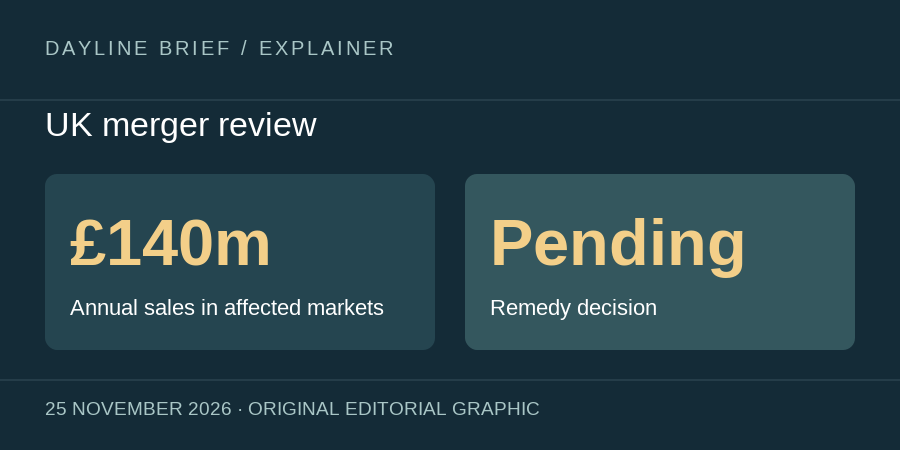
The UK Competition and Markets Authority (CMA) said on 25 November that a proposal from McCormick could address concerns over its planned acquisition of most of Unilever’s food business. The company has offered to sell Colman’s to a buyer acceptable to the regulator. The proposal has not yet secured final clearance.
Why cooking mixes are in focus
The regulator identified competition concerns in two areas: dry ingredient mixes and dry sauces sold to UK retailers. The products at issue account for about £140 million in annual UK sales, according to the CMA. It found the companies were close competitors and that supermarket own-brand alternatives and other brands provided limited competitive pressure.
Why sell a brand?
A divestment is one possible remedy for a merger that could reduce competition. Selling an existing business to an independent buyer may preserve a competing supplier rather than leaving the combined company in control of both sets of products. Whether it achieves that goal depends on the assets sold, the buyer’s capabilities and the practical terms of the arrangement. The regulator must assess whether the remedy is effective.
Mustard is not the main concern
Although Colman’s is closely associated with mustard, the CMA separately examined mustard and did not find competition concerns in that area. Its assessment distinguished the styles of mustard offered by the companies. The proposed sale therefore has a wider significance than the familiar yellow mustard packaging might suggest.
What happens next
The CMA intends to seek feedback and examine the offer. If satisfied, it can approve the deal subject to enforceable commitments; if not, it can send the transaction to a more detailed investigation. The announcement is not evidence that shelf prices have changed or that Colman’s already has a new owner. Consumers should distinguish a proposed corporate remedy from an actual completed sale.
Sources & further reading
AI-assisted, source-based brief, not firsthand reporting. Information available on 25 November 2026. See editorial standards for corrections.