OpenTable agrees to buy Australia's me&u: what diners should know about digital menus and surcharges
The proposed restaurant technology merger brings QR ordering into focus. Calculate your dining bill and understand Australia's card-payment and public holiday surcharge rules.
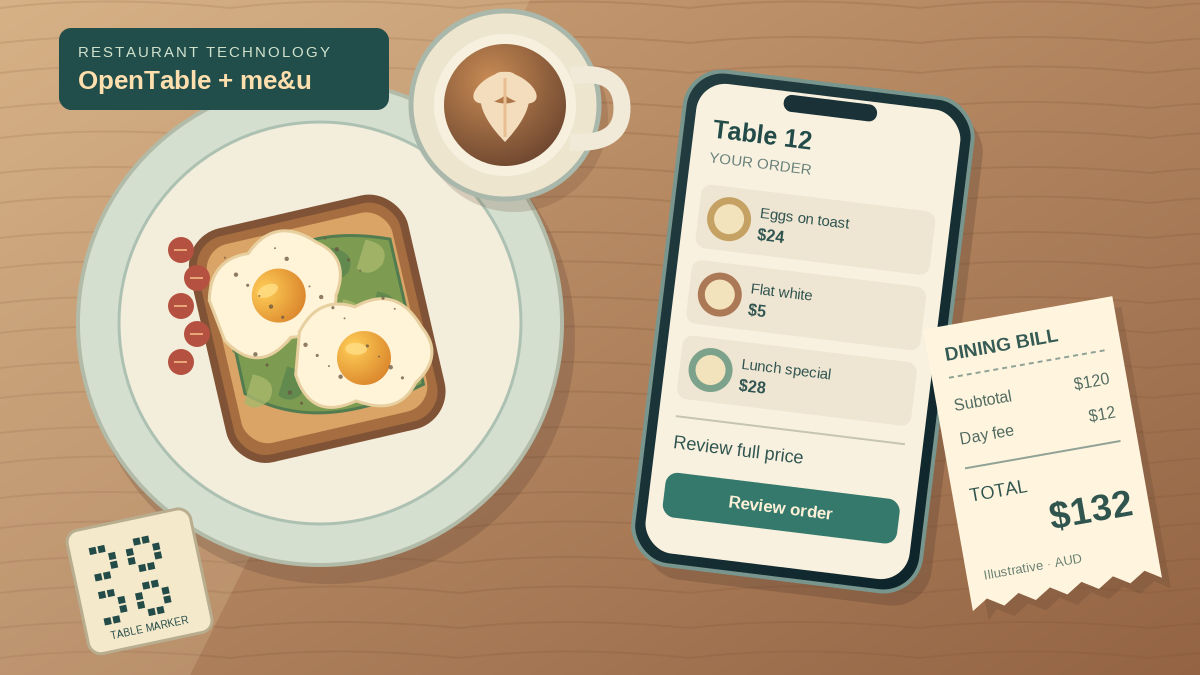
OpenTable has agreed to acquire Australian hospitality software provider me&u, in a deal announced in the United States on November 24 and Australia on November 25. The proposed purchase combines a large restaurant reservation network with a platform best known for allowing customers to order and pay from their tables.
The companies expect completion in the first half of 2027, pending regulatory approvals and other closing conditions. The official announcement does not disclose financial terms. Australian publication SmartCompany reports a $450 million valuation attributed to me&u founder Stevan Premutico.
From a table reservation to a digital bill
Source: OpenTable announcement. Scale figures are company-reported; completion remains conditional.
OpenTable, which belongs to Booking Holdings, plans to keep me&u as a separate division after closing. Its Australian operation has grown beyond QR menus to include tools for venue management and customer interactions. Existing clients have been told that current products and pricing will continue. There is no announcement that every OpenTable restaurant will adopt digital ordering.
Australian card surcharges have changed
Separate from the acquisition, card-network rules introduced on 1 October 2026 prevent Australian businesses from adding a surcharge specifically for payment with Visa, Mastercard, American Express or eftpos cards. According to the Australian Competition and Consumer Commission (ACCC), payment acceptance costs can instead be incorporated into ordinary prices.
A surcharge for dining on a Sunday or public holiday is different. Restaurants can still apply a properly disclosed day-specific surcharge. The disclosure must be at least as noticeable as the most prominent menu price. Fees that apply every day generally belong in the displayed minimum total price when they can be calculated in advance.
The name of a charge does not settle whether it is permitted. Renaming a card-processing charge as a service fee does not necessarily change its underlying purpose. A genuine service charge unrelated to payment method may still be permissible if the applicable pricing requirements are met.
Calculate your dining bill before paying
Enter the menu subtotal including GST and any charges already included in displayed prices. Add the applicable day-specific surcharge and any remaining disclosed charges only once. These are fictional examples, not rates charged by me&u or OpenTable.
Day-specific surcharge: $12.00
Bill before voluntary tip: $132.00
Total including tip: $132.00
Equal share per diner: $33.00
Amounts are in Australian dollars. Assumes the percentage surcharge applies to the full menu subtotal only. Actual fee bases, rounding and discounts may differ. Do not enter a prohibited card surcharge as a day-specific fee. The calculator does not determine whether an individual charge is lawful. Input calculations run locally.
What to check on a digital menu
Look at the price of the entire meal, including selected extras, before submitting an order. Check that you have selected the correct table, quantities and dietary requirements. If a platform prompts for an optional tip or donation, review your selection rather than assuming the default reflects your preference.
A QR code on a table is convenient, but it is not proof of authenticity. If a sticker looks damaged or replaced, ask venue staff for the correct ordering method before entering card information. People who cannot use a smartphone should ask staff about available alternatives.
What restaurant owners should evaluate
A combined reservation and ordering system could reduce the need to enter information twice. But the useful test is whether it improves service and reduces operating costs at a specific venue. Ask about fixed subscriptions, transaction expenses, hardware, integrations, contract terms and how customer information can be exported.
Compare performance during a busy service as well as during a demonstration. Measure ordering errors, wait times and staff interventions. Plan an alternative process for poor connectivity or software downtime. A venue that relies on a single system for ordering and payment needs a way to continue serving customers when that system is temporarily unavailable.
If you think a charge is incorrect
The ACCC recommends asking the business to explain the fee and requesting a refund if it turns out to be a card surcharge. Unresolved card-network issues can be raised with the relevant network or payment provider; misleading price displays can be reported to consumer protection agencies. The ACCC does not itself enforce the card-network contract rules.
Keep the receipt and a record of the prices shown before checkout. The acquisition does not alter these consumer protections or establish that either company has breached them. It highlights why transparent checkout design matters as more restaurant transactions move onto phones.
Sources & further reading
AI-assisted, source-based explainer. The transaction is proposed; its value is attributed to secondary reporting, not confirmed in the official release. No venue, checkout or contract was independently tested. The calculator is illustrative and the surcharge guidance applies to Australia, not other countries. See editorial standards for corrections.