Kidlington waste dumping investigation reaches seven arrests: how to check your waste collector
The Environment Agency announced another arrest on November 25. Learn how to verify a private rubbish removal business and document your household waste collection in England.
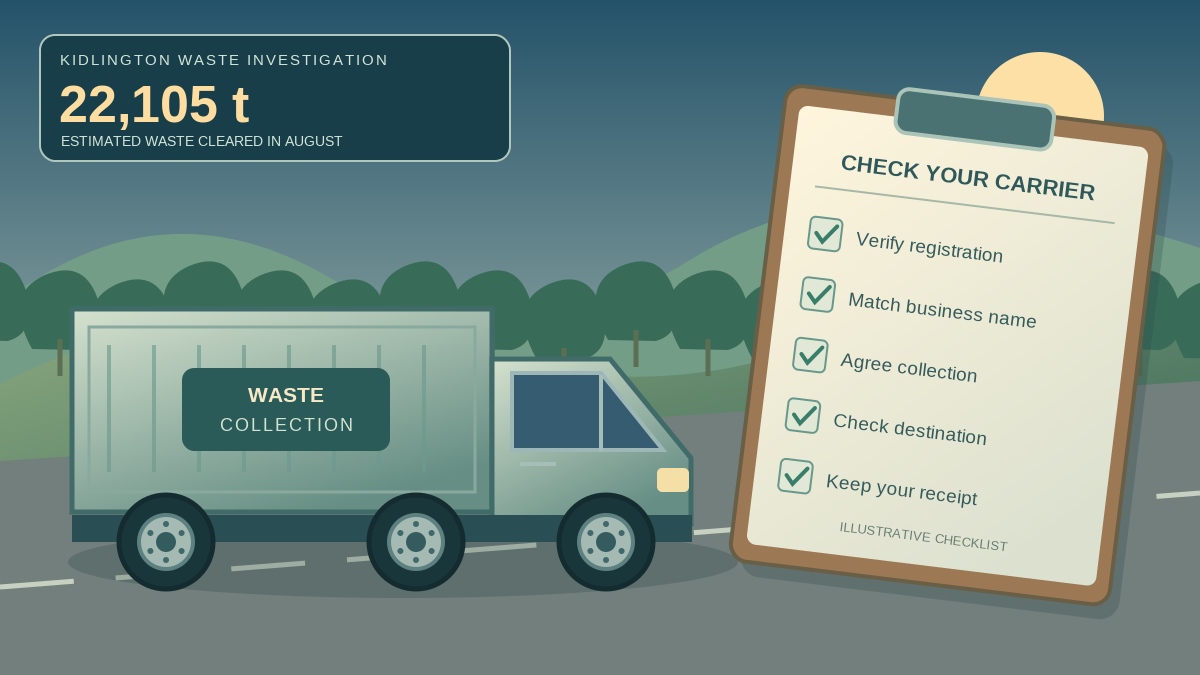
The Environment Agency announced a seventh arrest on November 25 in its investigation into illegal waste disposal near Kidlington, Oxfordshire. A man from Greater London was arrested and subsequently released on conditional bail while enquiries continue. An arrest is not a conviction, and responsibility for the offences remains a matter for the investigation and any subsequent court proceedings.
The physical clearance was completed in August, when contractors removed an estimated 22,105 tonnes of mixed waste. The criminal investigation remains active despite the site having been cleared.
The investigation and cleanup
Source: Environment Agency, November 25. The waste figure is an estimate; arrests do not establish guilt.
For householders, the wider issue is what happens to rubbish after a private collection. Hiring a company does not eliminate the need to make reasonable checks about who receives it. The government provides an online register that makes this part of the process accessible without buying a commercial verification service.
Before hiring someone to clear a house or garden
Start by checking what your council offers. It may collect bulky items for a charge or accept them at a local household recycling centre. Reusable furniture may also be suitable for donation or resale. Availability, booking arrangements and accepted materials differ between councils.
If you need a commercial collection, use the official waste carrier register. GOV.UK instructs householders using private waste clearance companies to check for upper-tier registration. Charities and certain other organisations can fall under different rules. This article focuses on ordinary private commercial collections in England.
Search by business name or registration details, confirm the entry is valid, and check that the company offering the service is the one identified on the register. A registration number printed on an advertisement is not a substitute for checking the actual entry. If anything is unclear, ask the Environment Agency for help.
Interactive: private waste collection checklist
Complete these checks before arranging a normal commercial household waste collection in England. The first three are particularly important for identifying the carrier. The remaining items help you arrange and document the collection.
0 of 6 checks completed. Start by identifying the carrier and checking the official register.
Open the official waste carrier register
This is a self-reported checklist, not a live registration lookup or legal compliance certificate. It does not verify a collector or transmit your selections. Records are recommended evidence, not a separate statutory requirement under the household guidance.
Keep the receipt, not just the advert
Save the registration check and a receipt identifying the business and the service purchased. You can also record the vehicle details at collection. A screenshot can be useful when an advertisement later disappears. The official code explains that keeping records is not itself a legal requirement for householders undertaking these checks, but records can help demonstrate the steps taken if waste is later discovered dumped illegally.
Compare like-for-like quotes and confirm whether the price includes collection, loading and disposal. A low price alone does not prove illegal activity; equally, a premium price does not establish that a business is authorised. Make the registration check independently of the price.
What if waste is produced by a builder?
Construction and renovation waste generated by a tradesperson is business waste under GOV.UK guidance, and the tradesperson must arrange proper removal. Clarify responsibility and disposal costs in the work agreement. Do not assume that materials produced by a business are automatically accepted at your household recycling centre.
What to do if you discover dumped waste
Report ordinary fly-tipping to your local council through the GOV.UK reporting service. For serious waste crime, follow the reporting routes on the same page. Note the location and provide relevant information if it is safe to do so. Do not approach suspected offenders or handle unknown waste, especially material that could contain sharp objects, chemicals or asbestos.
The Kidlington investigation illustrates why clearance and enforcement are separate tasks. Householders cannot control every action a collector takes, but checking the carrier's authorisation and retaining evidence are practical ways to reduce the risk of handing rubbish to an unauthorised operator.
Sources & further reading
AI-assisted, source-based explainer. The investigation is ongoing; no findings of guilt are inferred from arrests. No individual carrier was checked. Household guidance is specific to England and does not replace professional legal advice. See editorial standards for corrections.