Canada faces a mortgage renewal wave in 2027: calculate what your new payment could be
A new TransUnion report highlights growing mortgage balances and repayment pressures. Compare possible renewal rates and learn how to prepare before your current term ends.
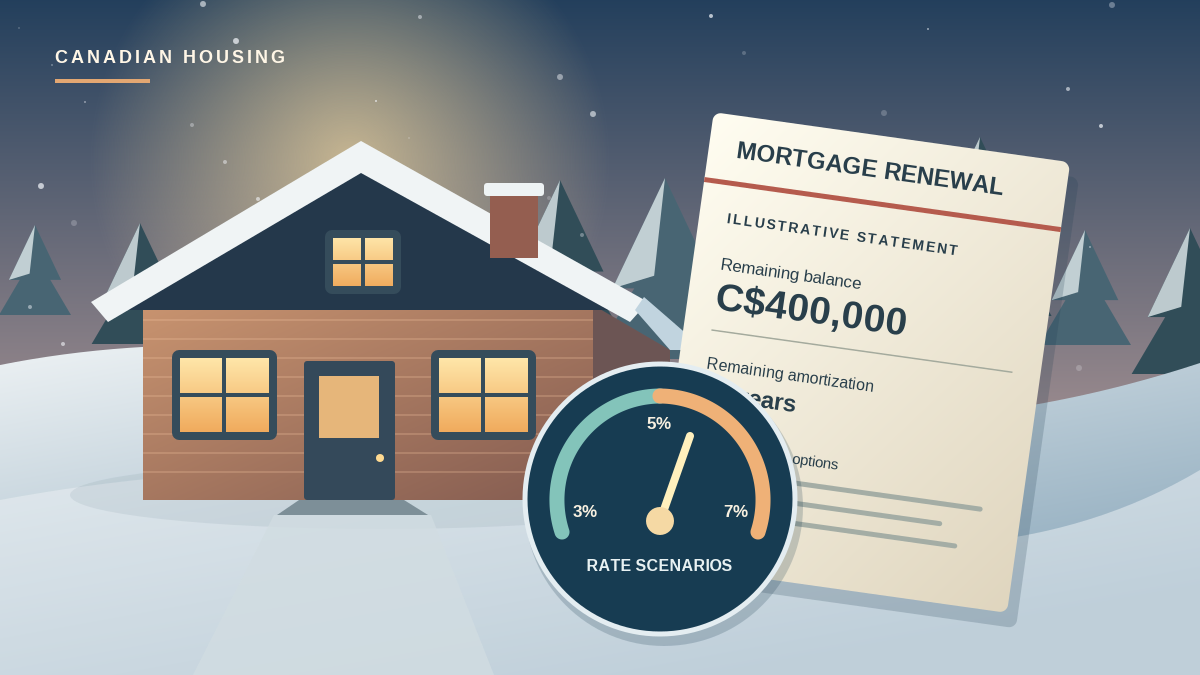
For Canadian homeowners approaching the end of a mortgage term, the most important number may not be the interest rate advertised in a bank's window. It is the difference between their existing monthly payment and the amount they will owe after renewal.
In its third-quarter credit industry update published on November 25, 2026, TransUnion warned that 2027 is expected to bring a large volume of renewals, with some borrowers already showing signs of financial strain. The credit bureau described the broader market as relatively resilient, despite record outstanding consumer credit of C$2.66 trillion.
What the new figures show
Source: TransUnion, November 25 credit report. Common zero baseline. The average increased 8.6% over two years.
The bureau also found that the proportion of mortgage accounts at least 90 days overdue reached 0.21% in the third quarter, compared with 0.18% a year earlier. Serious arrears therefore remain uncommon, even though the direction of change warrants attention. Equifax's separate November 24 report likewise flagged borrowers with limited capacity to absorb further payment increases. The bureaus use their own datasets and definitions, so their totals should not be treated as identical national measures.
Not all renewals will be more expensive. Canada Mortgage and Housing Corporation's fall industry report notes that, if prevailing market conditions persist, a greater number of households may renew at similar or lower rates. The outcome depends heavily on the rate in the original contract, the balance remaining and the offers available at renewal.
Term and amortization are not the same thing
A mortgage term is the period during which the current contract applies. Amortization is the longer period over which the debt is scheduled to be paid off. For example, a borrower nearing the end of a five-year term might still have 20 years of amortization left. The renewal calculation should use the remaining balance and remaining amortization, not the original home price and original loan duration.
Calculate your potential monthly payment
Enter your expected remaining balance at renewal, remaining amortization and two hypothetical rates. The calculator compares fully amortizing monthly payments at those rates on the same balance and schedule. It uses nominal annual rates compounded semi-annually, a common Canadian fixed-rate mortgage convention. Actual variable-rate products, rounding and contract terms may differ.
Mortgage renewal calculator (CAD)
Illustration only. Excludes taxes, insurance, fees and other charges. The assumed rates are not lender quotes or forecasts. Your entries remain on your device.
How much difference can one percentage point make?
For a hypothetical C$400,000 balance with 20 years remaining, even a one-point change in the annual rate makes a noticeable difference to the household's regular outgoings.
| Rate | Monthly | Extra vs. 3% |
|---|---|---|
| 3.0% | $2,214.67 | $0.00 |
| 4.0% | $2,416.99 | $202.31 |
| 5.0% | $2,628.50 | $413.83 |
| 6.0% | $2,848.75 | $634.08 |
Calculated using the assumptions above. These are scenarios, not a prediction of 2027 mortgage rates.
Prepare before the renewal notice arrives
The Financial Consumer Agency of Canada (FCAC) recommends comparing lenders well before the current term expires. Federally regulated lenders are required to send a renewal statement at least 21 days before maturity; that minimum notice period should not be mistaken for the ideal time to start looking.
Compare the whole contract rather than just the rate: term length, prepayment rights, fees, penalties and the ability to move the mortgage if you sell. Switching lenders may require a new approval process and additional expenses. If you have mortgage insurance, ask how it will be handled.
If your projected payment is difficult to afford, contact your lender early to discuss available options and their costs. Extending amortization can reduce monthly payments but generally increases the interest paid over the life of the loan. A lower monthly payment is not automatically a cheaper mortgage.
Sources & further reading
AI-assisted, source-based explainer, not individualized financial advice. TransUnion's release was reviewed in full via GlobeNewswire; Equifax, CMHC and FCAC guidance were checked through retrieved extracts. Payment scenarios are independently calculated, not quoted from the reports. See editorial standards for corrections.