California fines Afterpay $2.68 million: check your Black Friday installment budget
California's financial regulator says Afterpay failed to adequately assess new borrowers' ability to repay. Compare overlapping pay-in-four purchases before holiday shopping.
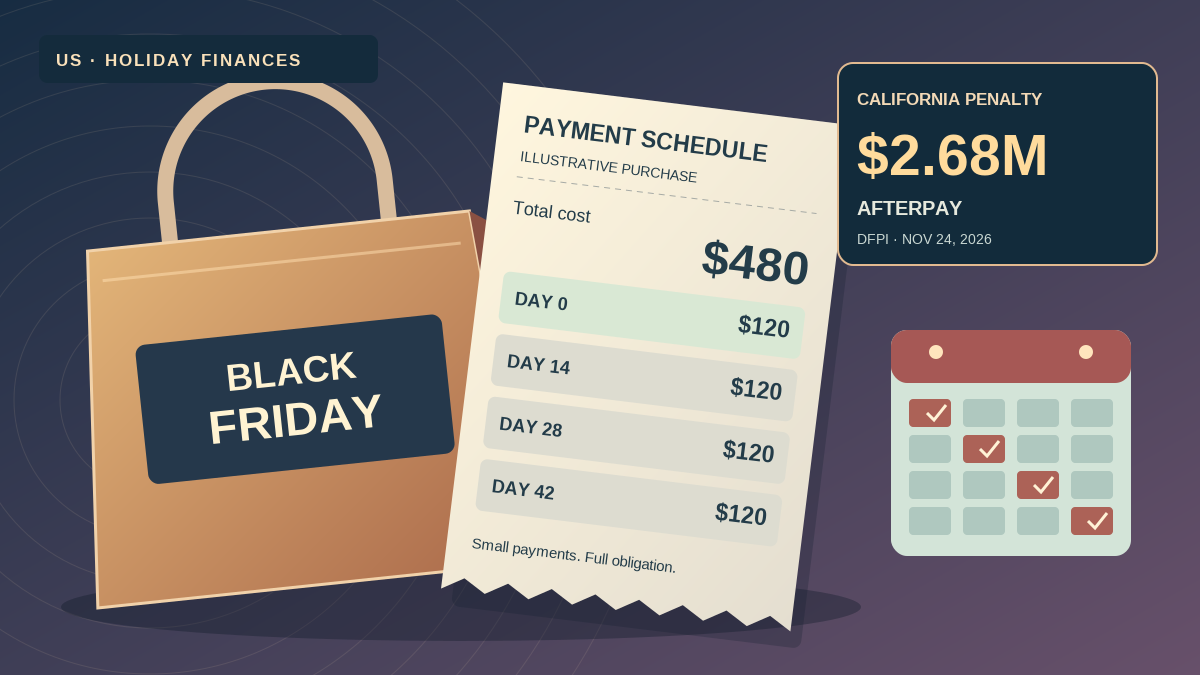
As Black Friday approaches, shoppers may encounter installment offers that make a large purchase look like a small payment. A new California enforcement action highlights the difference between being offered credit and having enough money to repay it.
On November 24, the California Department of Financial Protection and Innovation (DFPI) announced a $2.68 million penalty against Afterpay US Services. The regulator found inadequate affordability checks when the company extended credit to new customers during the period from January 2020 to March 2022. Payments Dive reported on the action on November 25.
The regulator says lenders must evaluate repayment capacity under California law. The case concerns historical lending practices; the penalty does not itself establish that every current Afterpay loan is unlawful or that every borrower will receive a refund.
Four payments are still one purchase
A common buy now, pay later (BNPL) arrangement divides a purchase into four installments, beginning at checkout and followed by three payments at two-week intervals. Other arrangements may charge interest or run for longer. Read the actual agreement rather than assuming that all installment products follow the same schedule.
Consider a fictional $480 purchase split into four equal payments. The first $120 payment leaves $360 still owed. If a second purchase costs $240 and begins two weeks later, its $60 installments overlap with the first loan. The combined payment reaches $180 every two weeks while both schedules are active.
See how two purchases overlap
Pay-in-four cash flow planner
Assumes two interest-free purchases, four installments each, with the second purchase starting 14 days after the first.
| Due | Payment | Budget left |
|---|---|---|
| Day 0 | $120.00 | $30.00 |
| Day 14 | $180.00 | −$30.00 |
| Day 28 | $180.00 | −$30.00 |
| Day 42 | $180.00 | −$30.00 |
| Day 56 | $60.00 | $90.00 |
Three payment periods exceed your available budget. Total purchase cost: $720.00.
Illustration only. Excludes fees, interest and existing loans. Actual due dates and installment rounding may vary. A positive balance is not a guarantee of affordability. Inputs stay in your browser.
Check the calendar, not just the advertised price
Before buying, add installment obligations from every provider to a single list. Put the actual due dates beside your paydays, rent, utilities and groceries. Two plans with identical totals can create different shortfalls if their payments fall on different days. Retain some cash for unexpected bills instead of allocating all remaining income to purchases.
For a holiday sale, compare the full cost with what you had planned to spend before the promotion appeared. A discount does not make an unplanned purchase free. If you cannot cover the payments without depending on another loan, postponing the purchase or choosing a less expensive alternative may be preferable.
What if a payment is missed?
The Consumer Financial Protection Bureau's consumer guidance warns that some installment lenders impose late charges. Automatic deductions may also lead to bank fees if the linked account lacks sufficient funds. Continued nonpayment can result in collections and may affect credit records. Policies differ by provider and loan product.
If you expect trouble making a payment, contact the lender promptly to ask what assistance is available. Keep copies of agreements, payment confirmations and correspondence. When returning merchandise, confirm with both the merchant and the lender how the refund affects outstanding installments; do not assume the schedule has been canceled.
What the enforcement action means for shoppers
The California penalty puts the responsibility of lenders under scrutiny. Consumers can also protect their own cash flow by checking the full cost, reading repayment terms and recording future obligations. The best starting point is a realistic budget, not the amount a checkout screen allows you to borrow.
Sources & further reading
AI-assisted, source-based explainer, not firsthand reporting or individual financial advice. The regulator's original release returned an access error; its republished statement and independent Payments Dive reporting were checked instead. CFPB consumer guidance was reviewed through retrieved text. The payment scenarios are fictional and do not reproduce any specific lender's terms. See editorial standards for corrections.