FIFA confirms hosts of 2031 and 2035 Women’s World Cups
Four North American and Caribbean nations will stage the 2031 edition, with the United Kingdom’s four football associations hosting in 2035.
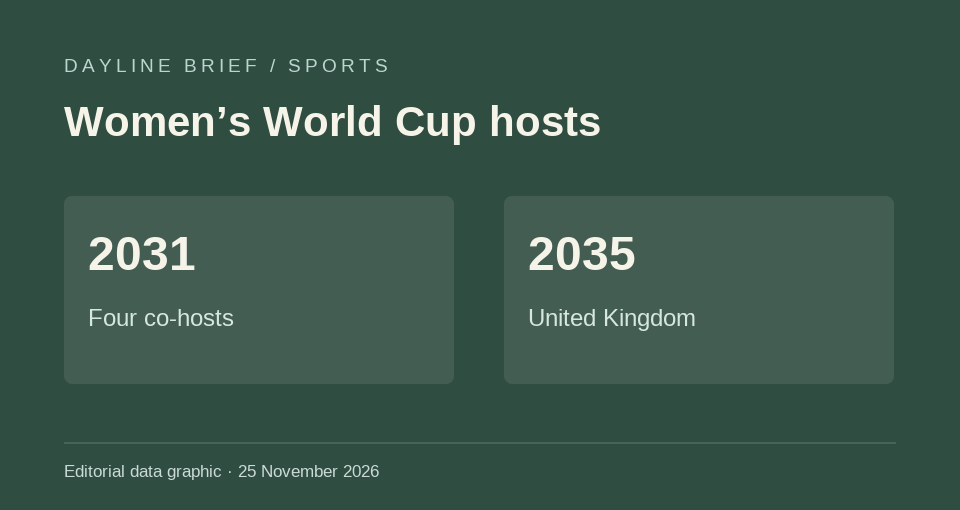
The two hosting decisions
FIFA confirmed the hosts for two future Women’s World Cups at its Extraordinary Congress on 23 November. The United States, Mexico, Costa Rica and Jamaica will jointly stage the 2031 tournament. The 2035 competition will be held across England, Northern Ireland, Scotland and Wales. FIFA says the 2031 edition will be the first Women’s World Cup with 48 participating teams.
Why the expanded tournament matters
A larger field means more national teams can compete on football’s biggest international stage. It also means a larger logistical undertaking for organisers. A tournament spread across several countries needs coordination between football associations, stadium operators, transport providers and local authorities. The venue allocation and fixture calendar will determine the practical distances players and travelling supporters must cover. Host confirmation alone does not establish those arrangements.
The UK’s sporting participation target
On 24 November the UK government announced an ambition to involve one million additional girls in sport by the 2035 tournament. The plan covers participation, viewing and leadership, alongside access to publicly funded facilities and changes to the conditions for public funding. The commitment is a policy target for the years ahead, rather than a measured result. It is broader than simply recruiting another million football players.
How a tournament can leave a legacy
Major sporting events offer an opportunity to bring new spectators to a sport, but long-term participation also depends on local opportunities. A girl who becomes interested in football during a World Cup needs somewhere to play afterwards, affordable access, and coaching. The availability of local pitches, clubs and suitable training times can matter as much as the excitement of the televised tournament. Measuring progress will require comparing participation and access over time, rather than relying solely on attendance during the event.
What fans can expect next
Before either tournament takes place, organisers will need to finalise competition arrangements and venues and publish information on tickets. Supporters should not treat unofficial ticket offers as confirmed sales. The next Women’s World Cup is in Brazil in 2027, so the two newly appointed hosts are planning well in advance. The confirmed host countries are the important new fact; detailed travel arrangements will come later.
Sources & further reading
This AI-assisted, source-based brief reflects information available on 25 November 2026. It includes explanatory context, not firsthand reporting. See editorial standards for corrections.