Britain's unfair dismissal rule changes in January 2027: will six months of service be enough?
The government's November 25 employment reform timetable sets out a shorter qualifying period and removal of the compensation cap. Check the planned service threshold and prepare for the changes.
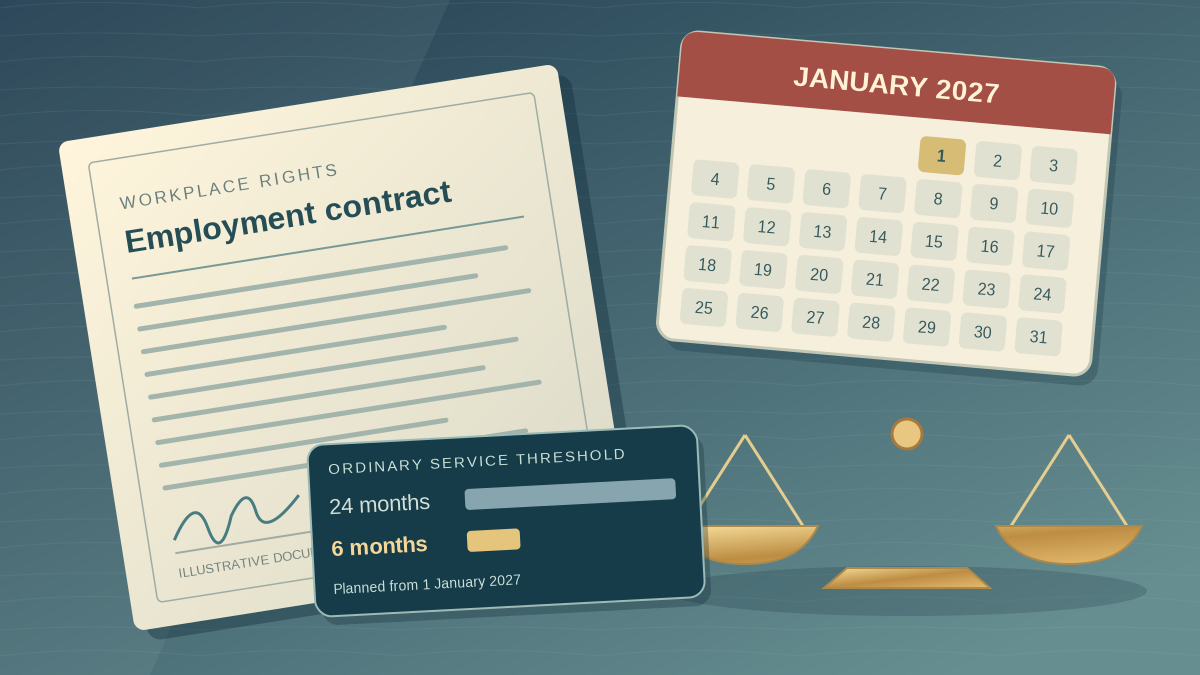
Employees in England, Scotland and Wales are approaching a significant change in workplace protection. An implementation timetable updated by the government on November 25 retains January 1, 2027 as the date for reducing the service requirement for ordinary unfair dismissal claims from two years to six months.
The update also lists changes to confidentiality agreements concerning workplace harassment or discrimination as due by January 2027. The CIPD's employment law roundup, published today, notes that these provisions had previously been expected in September 2027. Further details remain outstanding, and the government's timetable warns that future implementation dates may change.
What changes in January?
Source: Department for Business and Trade. Common 0–24 month scale. The change is a 75% reduction in the service threshold, not a reduction in the employee's other rights.
The government intends the shorter period to apply to employees who already have at least six months of continuous service on the commencement date, as well as employees who subsequently reach that point. It also plans to remove the current financial ceiling on compensatory awards and shorten the service requirement for requesting written reasons for dismissal.
Uncapped compensation does not mean an automatic large payout. Tribunals will continue to assess evidenced losses. The government's factsheet reports that the median unfair dismissal award in 2023–24 was £6,746, a historical figure rather than a prediction of future awards.
Check which ordinary service threshold applies
Use the legally effective termination date, rather than simply the date a manager tells you that your employment is ending. Enter completed months of legally continuous employment. If either is uncertain, seek advice before relying on the result.
Example: 8 months meets the planned 6-month ordinary service threshold for a dismissal on January 15, 2027.
This screening tool is based on the timetable published November 25, 2026. It is not a determination of claim eligibility, fairness or tribunal deadlines. Other protections can apply regardless of service. Inputs are processed locally by the page script.
Why the date can matter as much as the length of service
Two employees with eight months of continuous service may be in different positions if one is dismissed in December 2026 and the other after commencement. Notice arrangements may affect the legal calculation, however. The CIPD cautions that statutory notice can affect the qualifying-service calculation even when a contract provides for payment instead of working notice.
A probation period is a contractual arrangement; it does not override statutory protections. Similarly, expiry of a fixed-term employment contract can count as dismissal. Employees should retain contracts, correspondence, payslips and termination notices and ask for advice about disputed dates.
What the service checker cannot tell you
Meeting the threshold does not establish that a dismissal was unfair. A tribunal must consider the applicable facts, reasons and procedures. Conversely, failing the ordinary threshold does not rule out other claims, including discrimination or certain automatically unfair reasons for dismissal. The planned reforms do not remove existing day-one protections.
Do not wait for the January reform to seek help over an existing dispute. The government's employee guidance explains the requirement to notify Acas before bringing an unfair dismissal tribunal claim. Most employment tribunal time limits changed in October 2026, but exceptions and conciliation-related adjustments can affect the deadline. Obtain advice promptly rather than treating a general date calculation as a filing deadline.
Preparing for the wider timetable
Beyond January, the published schedule places dismissal-and-reengagement reforms in March 2027, new bereavement provisions in April and flexible-working changes in October. The dates for guaranteed-hours and short-notice shift protections remain dependent on consultation. Employers should review their induction, probation, dismissal and recordkeeping processes and revisit them when implementing regulations are finalised.
Sources & further reading
AI-assisted, source-based explainer. Future commencement dates remain subject to change. The interactive tool compares service thresholds only and does not verify employment status, notice, continuity or individual legal rights. Not legal advice. See editorial standards for corrections.