580,000 UK families use Tax-Free Childcare: calculate how much you could save
New HMRC figures show £53.5 million in childcare top-ups for September. Check how the scheme works, who qualifies and how much support you could receive.
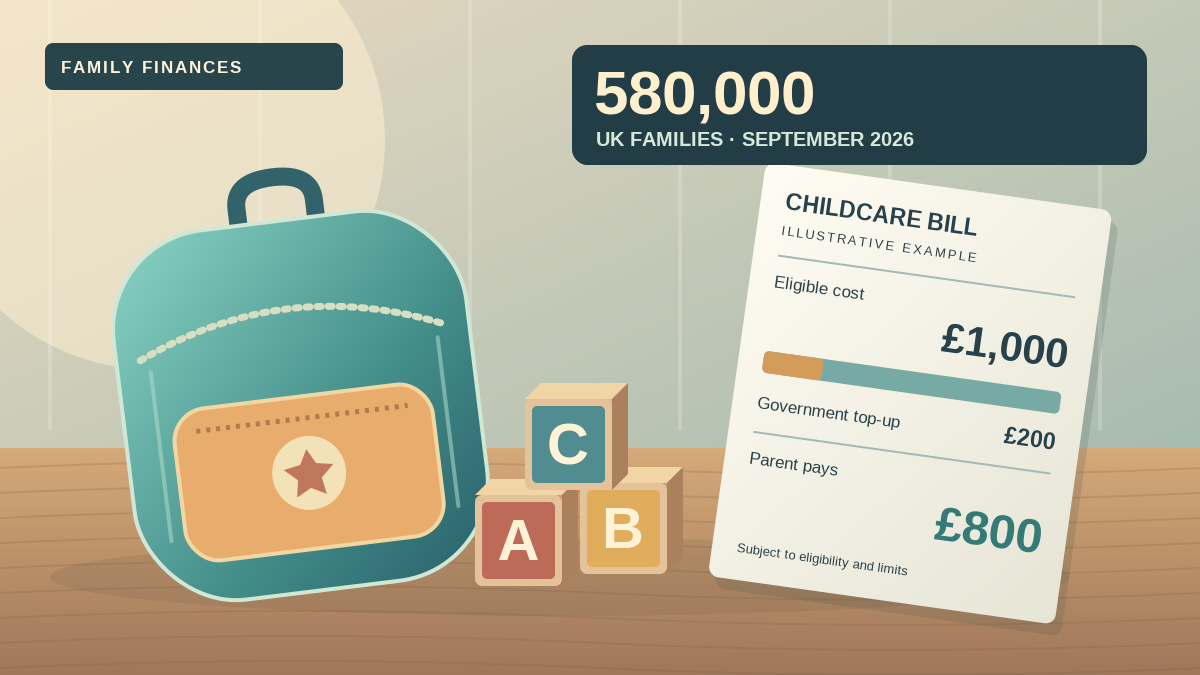
For a family paying a nursery invoice each month, the difference between a £1,000 bill and £800 coming out of its own pocket can be significant. The UK government's Tax-Free Childcare scheme can help eligible parents cover that difference, subject to contribution limits.
Statistics published by HM Revenue & Customs on 25 November 2026 put September participation at approximately 580,000 households, covering 714,000 children. The government contributed £53.5 million to accounts that month. Usage had dipped during the summer holidays before recovering in September, so monthly movements should be interpreted in the context of the school calendar.
Why the average payment has fallen
Source: HMRC September 2026 commentary. The two averages cover different periods; the bars begin at zero.
HMRC attributes part of the change to the expansion of funded childcare hours in England. The latest average is not a new individual entitlement or a reduction in the statutory maximum. A household's contribution depends on its own qualifying costs and available allowance.
How the scheme works
Parents deposit money in a dedicated account. For every £8 they contribute, the state adds £2, meaning the government can cover one fifth of an eligible childcare bill. Each qualifying child has a separate limit of £500 per three-month eligibility period, or £1,000 for a qualifying disabled child. The corresponding annual maximums are £2,000 and £4,000.
The account is used to pay a registered participating childcare provider. This is not an unrestricted cash payment to a household, and opening an account does not establish that every childcare expense is covered.
Calculate your estimated quarterly saving
Enter the total eligible bill for one child over a single three-month entitlement period and the top-up allowance that remains. For a family with multiple children, calculate each child's costs separately.
Estimated government top-up: £500.00. Your contribution: £2,500.00. Effective saving: 16.7%.
Illustration for eligible costs and available allowance. Assumes no existing unused account balance and that all deposits and qualifying payments occur within the relevant period. Actual account top-ups may differ with timing and rounding. This tool does not assess eligibility or transmit your entries.
What different bills would mean
| Quarterly bill | Standard top-up | Parent pays |
|---|---|---|
| £600 | £120 | £480 |
| £1,500 | £300 | £1,200 |
| £2,500 | £500 | £2,000 |
| £3,000 | £500 | £2,500 |
| £4,500 | £500 | £4,000 |
Calculated examples for one eligible child with the full standard quarterly allowance remaining.
Who can apply?
Eligibility depends on the child's age, the applicant's work, income and immigration circumstances, and the circumstances of any partner. The usual minimum earnings test is based on working 16 hours a week at the applicable minimum wage. Each partner normally needs to meet the relevant conditions. Exceptions apply, including to some recently self-employed applicants.
Expected adjusted net income above £100,000 for either partner normally rules out eligibility. The income calculation includes relevant overseas income, so salary alone is not always the right measure. Most children qualify only until September after their eleventh birthday, with an extended age limit for qualifying disabled children.
Check other support before switching
Tax-Free Childcare cannot be received alongside Universal Credit or the old childcare voucher scheme. Some parents may be better off using a different programme. Funded hours are separate, and the rules differ between UK nations. Compare the overall household outcome before changing any existing benefit arrangement.
Check your provider participates, read the current eligibility rules and use the official application service. Existing users must reconfirm their details every three months. The figures released today show the scale of the programme, but the value to a particular family is determined by its own circumstances.
Sources & further reading
AI-assisted, source-based explainer, not firsthand reporting or individual benefits advice. HMRC's published commentary and current official guidance were reviewed through retrieved text; the underlying spreadsheet was not independently analysed. The calculator and examples are original illustrations. See editorial standards for corrections.