Nothing reveals Ear (note) AI recording earbuds: what to check before the December 8 launch
The London technology brand previews earbuds that capture calls and a case that records meetings. Compare ownership costs and check recording privacy before buying.
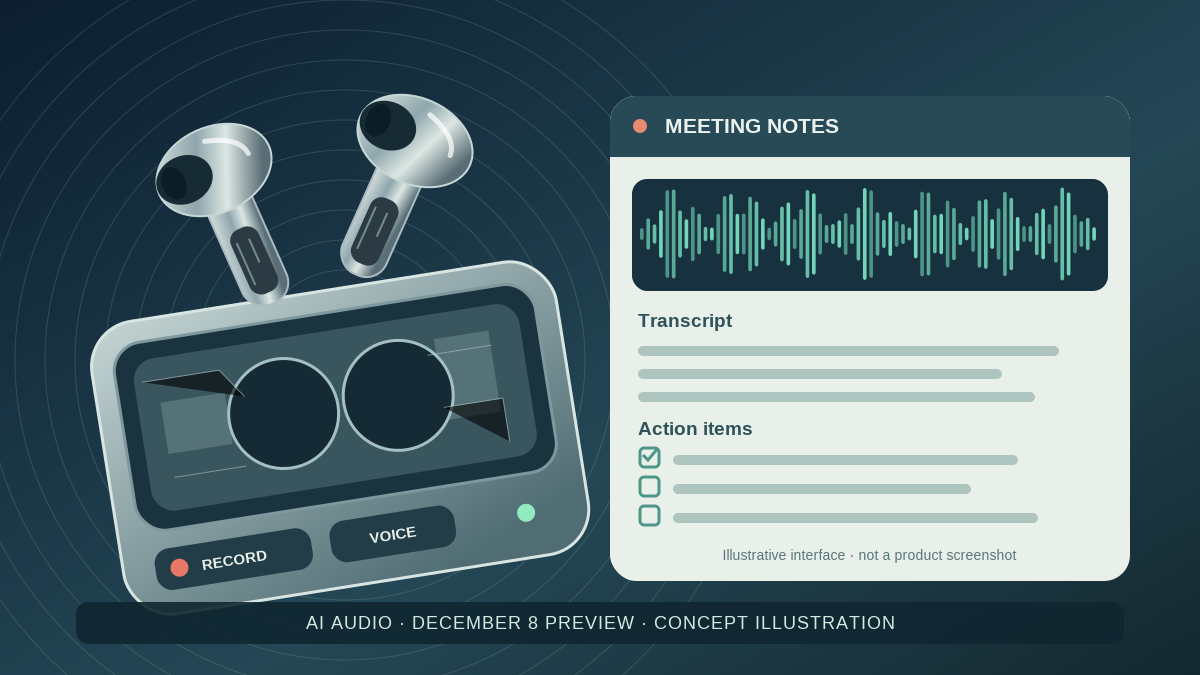
London-based consumer electronics company Nothing offered a closer look at its Ear (note) device on November 25, ahead of a planned December 8 unveiling. Instead of introducing a separate voice recorder, the company is combining its familiar wireless earbud format with AI-assisted transcription and summaries. The product is designed to capture calls as well as conversations taking place in the room.
Digital Trends reproduced the company's November 25 announcement, while Engadget, The Verge and Wareable reported details of the new hardware. Price, detailed battery performance and the complete commercial terms of its AI features remain open questions at the preview stage.
How the two recording modes differ
According to the coverage, the earbuds can capture calls, while microphones in the charging case are intended for face-to-face discussions. A companion application is expected to turn recordings into text and help extract useful information. The case features dedicated physical controls and visible status indicators.
These are distinct use cases. Recording a scheduled meeting in a quiet room is different from capturing speech on a busy street, or a call with several participants speaking at once. The quality of the transcript and the ease of identifying who said what will matter more to many buyers than the mere presence of AI features.
What is still unknown before December 8?
The preview does not establish the final retail price, the number of recording or transcription minutes included with purchase, the availability of paid upgrades, or how long the hardware lasts while recording. Nor does it confirm the full list of supported languages and regional launch markets. SoundGuys, which reported its initial experience with the device, notes that the category already includes products from competing AI audio companies.
Someone who needs both new earbuds and a note-taking service should compare the combined product against the cost of separate devices. Someone who already owns a good headset may be able to accomplish the same task with software alone. In that case the price of the existing headset is a sunk cost, not a new expense.
Interactive: compare total ownership costs
Enter your own hypothetical hardware prices and monthly service fees. This comparison is not a quotation for Ear (note): the starting numbers are fictional, and the inclusion of a recurring fee is a scenario rather than an assertion that Nothing will charge one.
Assumes unchanged fees, no financing or resale value, and comparable capabilities. Include any applicable tax in your own inputs. No exchange-rate conversion is performed.
Example: when the monthly fee matters more than hardware
In the fictional default scenario, a $200 device with a $10 monthly fee costs $440 over two years. Using existing earbuds with a $15 monthly software service costs $360. The separate setup saves $80 over that period. After 40 months, both would cost $600 if the fees remained unchanged. But if the new hardware included free transcription, the comparison would change significantly.
Privacy questions to ask before recording
A record button and an indicator light are not substitutes for appropriate permission. Recording requirements vary across jurisdictions and workplaces. Obtain clear permission from participants and comply with applicable rules before recording a conversation; do not assume a device's design makes recording lawful.
Also ask where audio is processed, whether original recordings are retained, whether account holders can delete them and whether recordings or transcripts are used for model training. For workplace meetings, confirm that the service is approved for the type of information being discussed. Avoid uploading confidential client information to an unapproved service. Review AI-generated notes for mistakes before relying on them to make decisions or assign tasks.
What buyers should look for at the unveiling
- Complete hardware price, regional availability and return policy.
- Recording time, playback battery life and charging requirements.
- Transcription allowances, renewal terms and supported languages.
- Export and deletion controls for recordings and transcripts.
- Independent tests of speech recognition, sound quality and comfort.
The December 8 announcement is the next opportunity to fill in these gaps. Until then, a comparison of possible costs is more useful than assuming a particular subscription fee or preordering on the basis of unconfirmed specifications.
Sources & further reading
AI-assisted, source-based explainer. Published November 25, 2026. Product details are based on previews and may change. Dayline Brief has not independently tested the earbuds. Calculator inputs are hypothetical, not advertised prices. See editorial standards for corrections.