Dutch poverty rate remains at 3%, but rises among workers
Statistics Netherlands reports 521,000 people in poverty in 2025, with a further 1.1 million close to the threshold.
The national picture
Statistics Netherlands (CBS) published new poverty figures on 25 November. Its provisional estimate for 2025 puts 521,000 people below the poverty threshold, or 3.0% of the population. The national percentage was unchanged from 2024. The share of children in poverty also remained at 2.6%.
Why employment does not tell the whole story
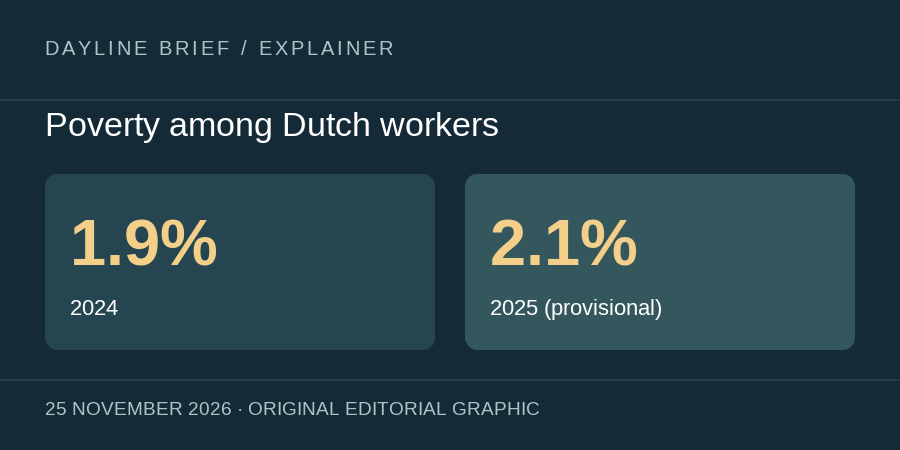
The poverty rate among people whose main income came from work increased from 1.9% to 2.1%. The figures underline a distinction between being employed and having enough household resources to meet basic expenses. Hours worked, earnings, family circumstances and unavoidable costs can all affect the financial position of a household. Employment statistics alone do not reveal whether a household can cover its needs.
The group just above the line
CBS also estimates that approximately 1.1 million people were at risk of poverty. This measure includes households with income less than 25% above the poverty threshold and assets below the relevant limit. It is distinct from the population already classified as poor. A household near the threshold may be vulnerable to a change in earnings or essential expenditure even if it is not currently below the line.
Regional differences
National averages conceal geographical variation. CBS reported rates of 6.0% in Amsterdam and 5.6% in Rotterdam, while Vaals recorded 6.4%. These percentages refer to the residents of each municipality, not their contribution to the nationwide total. Comparing percentages rather than raw counts is important when municipalities differ substantially in size.
Reading the figures correctly
The release uses a statistical poverty measure, rather than a count of applications for benefits. The results cannot establish that a particular person qualifies for assistance. The 2025 figures are provisional and could be revised. The most important takeaway is that a stable national rate can coexist with a deterioration for specific groups.
Sources & further reading
AI-assisted, source-based brief, not firsthand reporting. Information available on 25 November 2026. See editorial standards for corrections.