Black Friday cyber warnings highlight fake shops and delivery scams
New research points to increased attacks against consumer businesses, while US consumer authorities warn shoppers to verify online stores independently.
What researchers are seeing
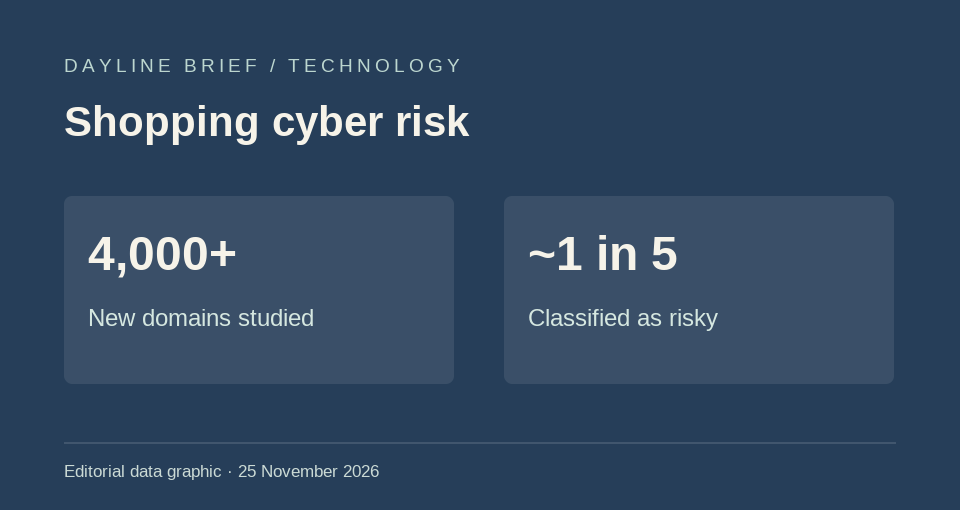
Check Point Research reports that organisations in its consumer goods and services category experienced an average of 2,458 weekly cyberattacks per organisation during September and October 2026. That is 28% above the earlier part of the year in its measurements. Its researchers also identified more than 4,000 newly registered domains associated with retail brands, delivery companies and seasonal sales between October and 8 November; nearly a fifth were classified as risky. These are vendor observations, not a census of all online shops.
Why the shopping season is attractive to scammers
Retail promotions encourage shoppers to act quickly, and delivery messages are especially common when many people are waiting for parcels. A message imitating a store or courier can exploit that ordinary expectation. Separately, Reuters reported on 25 November that insurer CFC’s claims data show ransomware incidents across retail, leisure and hospitality occur 50% more frequently in November than the average month. That finding relates to the insurer’s dataset, not every business worldwide.
A practical check before paying
The US Federal Trade Commission advises shoppers to navigate directly to a retailer’s known website instead of relying on unfamiliar search-result links. Check the domain name, seller identity, return conditions and the final price before completing an order. An encrypted connection does not establish that a seller is legitimate. For an unexpectedly cheap product, compare prices with established sellers before providing payment information.
Be cautious with parcel notifications
An unsolicited request to pay a small delivery fee or confirm an address deserves particular scrutiny. Open the courier’s official website or app separately and enter the tracking number yourself. If there is a genuine problem, the official tracking service may show it. Avoid sending passwords or financial details in response to messages that create a sense of urgency.
If something has already gone wrong
Contact your payment provider promptly using a known contact number if you believe your payment details have been stolen or a purchase is fraudulent. Keep relevant receipts and messages. Credit cards may offer dispute protections, although applicable rules vary by country and payment method. For retailers, preparation also includes tested backups and a plan to maintain operations if systems fail. The aim is to reduce risk without assuming that every unfamiliar website is malicious.
Sources & further reading
This AI-assisted, source-based brief reflects information available on 25 November 2026. It includes explanatory context, not firsthand reporting. See editorial standards for corrections.