BepiColombo reaches Mercury after eight years: why the closest planet to the Sun is so hard to reach
The European-Japanese mission entered orbit on 21 November despite a software glitch. Its arrival illustrates why travelling towards the Sun requires braking, not simply acceleration.
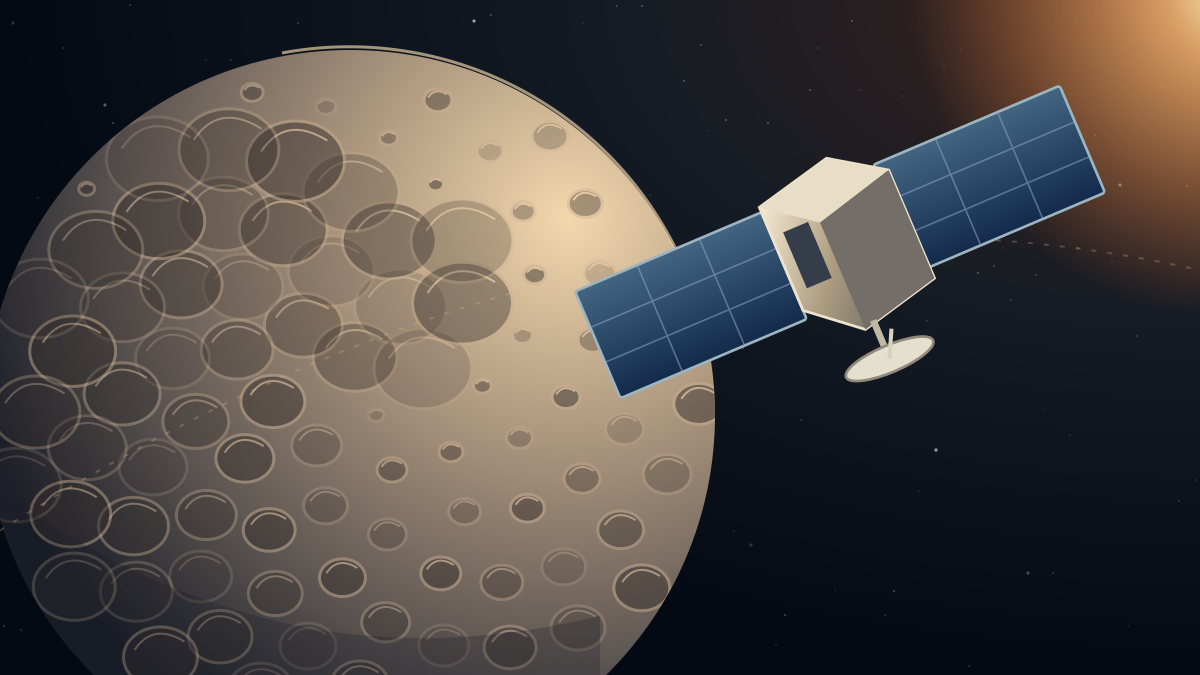
Mercury is the innermost planet of the Solar System. Yet reaching it and staying there can be more difficult than travelling to worlds far beyond Earth. The European-Japanese BepiColombo mission has now crossed that threshold, arriving in Mercury orbit on 21 November 2026.
Launched in 2018, the mission carries two scientific spacecraft. Reuters reported that a software problem shortened the planned engine firing during the arrival manoeuvre. Nevertheless, the spacecraft was captured by Mercury's gravity. That is a major achievement, though work remains before the two orbiters can begin their routine scientific observations.
Why going closer to the Sun means slowing down
When a rocket leaves Earth, it does not start from rest relative to the Sun. It inherits much of Earth's orbital motion. To reach an inner planet, the spacecraft must change the shape and energy of its orbit around the Sun.
Gravity complicates the journey. As a spacecraft drops towards the Sun, it tends to accelerate. It can therefore reach Mercury's neighbourhood travelling too quickly relative to the planet to remain gravitationally bound. Getting to the right location and matching the right motion are separate problems.
Think of catching a moving train: arriving at the platform is not enough if you cannot match its movement. The analogy is imperfect, because a spacecraft operates in three dimensions under gravity, but it illustrates why proximity alone does not guarantee a successful arrival.
Nine encounters helped reshape the journey
Rather than relying exclusively on fuel-consuming engine firings, BepiColombo used planetary flybys to adjust its path. Passing a moving planet at the correct angle can transfer a tiny amount of orbital energy between that planet and the spacecraft. Engineers can use this effect to change the spacecraft's speed relative to the Sun.
Source: ESA mission journey and Associated Press. Each circle represents one encounter, not the planet's relative size.
These encounters were not nine separate attempts to enter orbit. Each contributed to the carefully planned trajectory. The trade-off is time: the spacecraft had to travel between encounters and wait for the correct alignment of planets.
Two orbiters, two perspectives
The mission combines ESA's Mercury Planetary Orbiter and the Japanese space agency JAXA's Mercury Magnetospheric Orbiter, known as Mio. The first investigates the planet itself, including its geology and composition. Mio focuses on the magnetic environment and its interaction with charged particles from the Sun.
Simultaneous measurements are valuable because the environment around Mercury can change quickly. If one spacecraft detects a change, observations from another location can help researchers distinguish a passing disturbance from a persistent spatial feature. A single instrument moving through a variable environment cannot always separate those possibilities.
Mercury's biggest puzzles
Mercury has a magnetic field despite its small size. Studying that field may improve understanding of the planet's internal structure. Another intriguing feature is the evidence for water ice in permanently shaded polar regions. An exposed surface near the Sun can become extremely hot, but a deep crater whose floor never receives direct sunlight has very different thermal conditions.
The orbiters will not land or collect physical samples for return to Earth. Their contribution will come from repeated measurements made above the surface and in the space around Mercury.
What happens next?
ESA's published arrival schedule calls for the spacecraft to separate on 9–10 December 2026, with the regular science phase expected to begin in April 2027. These remain planned milestones rather than completed events.
The next important updates will concern the separation, the establishment of the individual science orbits and instrument readiness. Mercury orbit insertion marks the end of the long interplanetary journey, not the end of the engineering work needed to turn the mission into a functioning observatory.
Sources & further reading
AI-assisted, source-based explainer, not firsthand reporting. Published 25 November 2026. See editorial standards for corrections.