BBC iPlayer could open to advertising and rival broadcasters: what would it mean for viewers?
New reporting points to a possible shared British streaming platform. Separate the proposed changes from today's TV licence rules and compare your annual viewing costs.
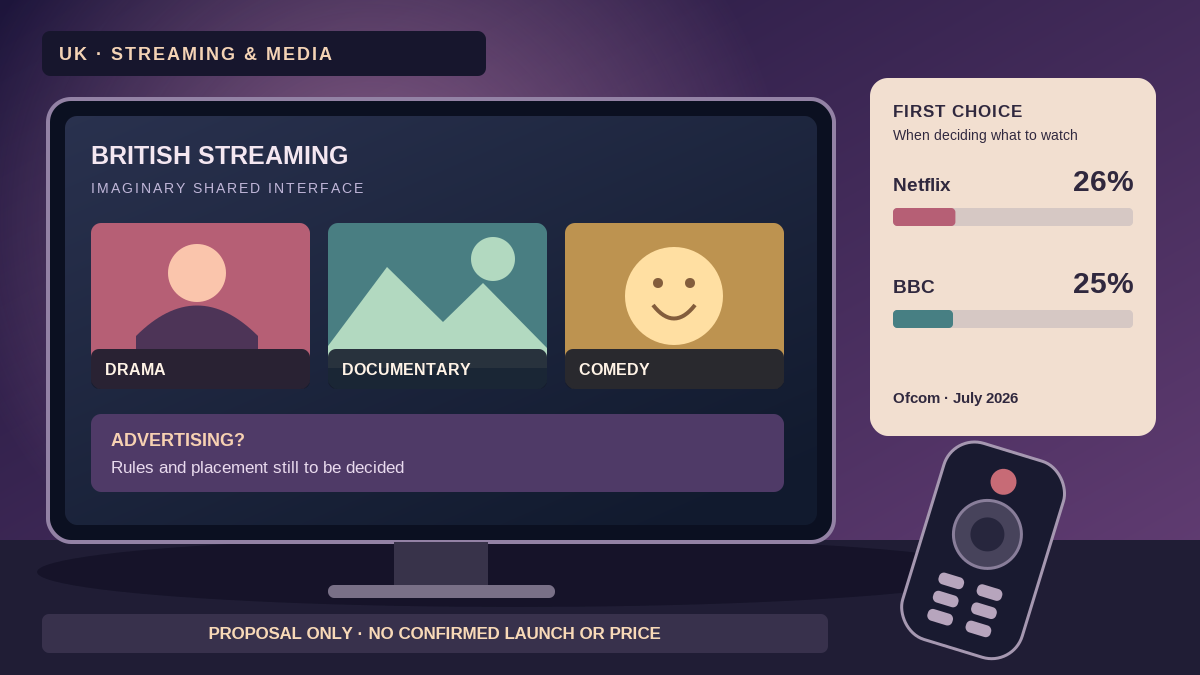
British television viewers could eventually find programmes from several domestic broadcasters within a single streaming app. Reuters reported on 25 November that plans to broaden BBC iPlayer are advancing, citing two people familiar with the discussions. Advertising technology and programming from other broadcasters, potentially including Channel 4, are among the possibilities.
The report points to the forthcoming BBC Charter review White Paper as a possible vehicle for the changes. The government told Reuters that no final funding decisions had been made. There is no confirmed launch date or new viewer price.
Why a shared platform is being discussed
For viewers, the question is often which app to open before they even know what they want to watch. Ofcom's July 2026 research found that Netflix and the BBC were virtually tied as the first destination people named when looking for something to watch.
Source: Ofcom, Media Nations 2026. Bars use a common 0–100% scale. These are stated first choices, not market shares, viewing hours or paid subscription figures.
A shared catalogue could make programmes easier to discover without switching apps. But an interface that combines services would still need rules about who owns the customer relationship, how search results are ranked, and who receives revenue when an advert is shown.
Three questions the proposal leaves open
Where would adverts appear? Advertising around a commercial broadcaster's programmes is different from interrupting BBC public-service programmes. The government's earlier Charter consultation also explored limited advertising around older BBC content. These options are not adopted policy.
Would every programme be available? A partnership need not include every programme a broadcaster produces. Rights agreements, availability windows and territorial restrictions can all affect the catalogue. Households should not cancel a service on the assumption that its entire library will become available elsewhere.
What happens to viewer information? A combined platform could involve multiple organisations handling account, viewing and advertising information. The eventual privacy choices, advertising arrangements and account requirements would need to be assessed against the actual terms when they are published.
Do you still need a TV licence?
Yes, if your current viewing activities require one. TV Licensing's current guidance covers BBC iPlayer and live television viewing on other services, including streaming platforms. Watching only non-BBC on-demand programmes, without watching live television or using iPlayer, generally does not require a licence. Check the official guidance for exceptions and the rules for your particular accommodation. Today's report does not alter these requirements.
Compare your annual viewing budget
Rather than guessing the price of an unannounced service, compare what you pay now with a hypothetical alternative package. Enter annual licence costs where required and the combined monthly subscription charges. You can also include other recurring viewing costs, provided you use the same definition in both columns.
Current: £540.00 per year. Alternative: £420.00 per year. Alternative saves £120.00 per year.
All defaults, including the licence amount, are fictional round-number examples, not current tariffs or announced prices. A licence requirement is determined by your viewing activities, not by this calculator. Your entries are processed locally.
What to look for in the White Paper
Look for a clear distinction between commercial content and public-service content, any proposed changes to licence obligations, and the process for approving partnerships. The parliamentary evidence from 17 November indicates that advertising capability would need to be developed before Channel 4 content could be offered in the proposed arrangement.
Until concrete arrangements are announced, households can make decisions based on the services they currently use. Review subscription renewal dates, accessibility features and the programmes each household member actually watches. The prospect of a new platform is not yet a confirmed saving on the household television budget.
Sources & further reading
AI-assisted, source-based explainer, not firsthand reporting or legal advice. Reuters' syndicated article was read directly; government consultation, parliamentary evidence, Ofcom research and TV Licensing guidance were checked through retrieved extracts. The reported plans rely on unnamed sources and are not final policy. Budget examples and illustration are original. See editorial standards for corrections.