Two Australian STEM teachers win A$250,000 each: how to nominate an educator for 2027
Australia's latest science teaching prizes recognise hands-on learning in NSW and Queensland. Check the 2027 nomination requirements before the January 7 deadline.
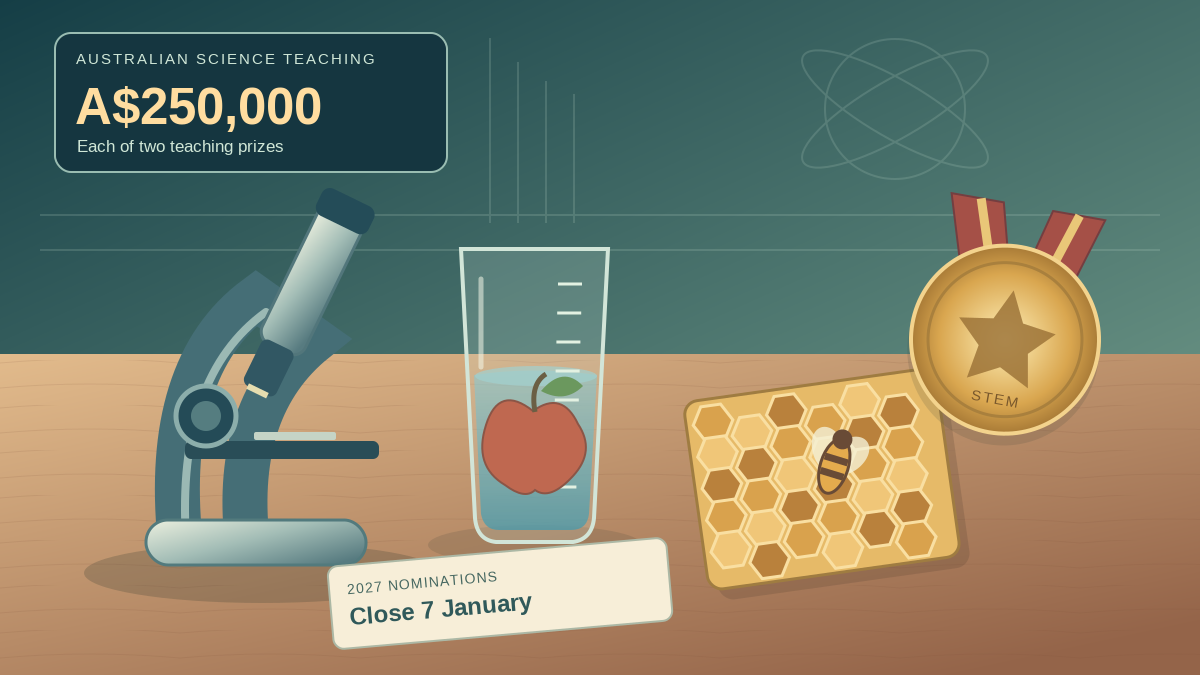
Australia has recognised two educators for making science and mathematics accessible to students across different ages and backgrounds. At the November 24 presentation of the 2026 Prime Minister's Prizes for Science, Dr Gabrielle Oslington received the primary teaching award and Nicolette Wheaton received the secondary teaching award. Each prize is worth A$250,000, as reported by Teacher magazine on November 25.
The awards highlight the value of experimentation and evidence in ordinary classrooms, while offering schools an opportunity to recognise other accomplished educators. Entries for the 2027 prizes are already open.
Primary school: learning science through familiar objects
Oslington teaches at Arden Anglican School in New South Wales. Her official prize profile describes projects that use fruit and playground materials to introduce children to measurement, predictions and experimental controls. She has also brought data-analysis software into primary education.
Her approach illustrates why science lessons do not always require expensive laboratory equipment. A classroom investigation can begin with a question about an ordinary object, followed by a prediction, a controlled observation and an explanation supported by measurements.
Secondary school: connecting science with real problems
Wheaton teaches at The Glennie School in Toowoomba, Queensland. Her work has included projects involving space science and the use of machine learning to identify Varroa mites, parasites that threaten honeybee colonies. Her career includes distance education and training future teachers.
These examples link classroom knowledge to problems outside school. Students must consider the limitations of their observations, communicate results and revise their methods when the evidence contradicts a prediction. The official profiles highlight her efforts to widen access to STEM among girls and regional learners.
2027 nominations at a glance
Source: official 2027 science teaching prize nomination guidance. A nomination is not an entitlement to prize money.
Interactive nomination preparation checklist
Use this checklist to identify preparation gaps before visiting the official portal. It covers selected conditions for the teaching categories only; the full guidelines govern eligibility.
0 of 8 checks marked complete.
Read official eligibility rules and access the nomination portal
Selections are self-reported and processed by the page script. This tool does not verify eligibility, save personal information or submit a nomination.
Build an evidence-based nomination
Begin by talking with the teacher about their willingness to participate. The first submission requires a short CV in the prescribed format and responses addressing the assessment criteria. Arrange two supporters early; special rules apply when a principal is nominated. Teachers on parental leave who plan to return may also qualify.
For a useful evidence file, organise examples around three questions: what educational problem did the teacher identify, what did they change, and what happened afterwards? Possible evidence includes anonymised student work, assessments, records of participation and independently documented feedback. Avoid publishing identifiable student information without appropriate permission.
Describe results in context. A small regional school's improvement may look different from a large metropolitan school's achievement. Explain the starting conditions, how progress was measured and which outcomes are directly supported by evidence.
An independent panel reviews first-stage entries and invites shortlisted nominees to submit more information. The panel later recommends recipients, with the final decision made by the minister. The January deadline is therefore the start of an assessment process, not the date on which winners are selected.
Sources & further reading
- Department of Industry, Science and Resources — Gabrielle Oslington's 2026 profile
- Department of Industry, Science and Resources — Nicolette Wheaton's 2026 profile
- Department of Industry, Science and Resources — eligibility and nomination process
- Department of Industry, Science and Resources — 2026 recipients
- Teacher magazine — November 25 coverage
- Department of Industry, Science and Resources — 2027 nominations
AI-assisted, source-based explainer. The awards were presented November 24; this article follows November 25 coverage. Achievements are based on the award profiles and reporting, not independent classroom observations. The checklist is not an official eligibility ruling. See editorial standards for corrections.