Australia explores 400 MW hydrogen project for green steel: what would the electricity cost?
Greensteel Australia and Envision Energy are assessing a new renewable hydrogen system in New South Wales. Model potential electricity demand, output and energy cost per kilogram.
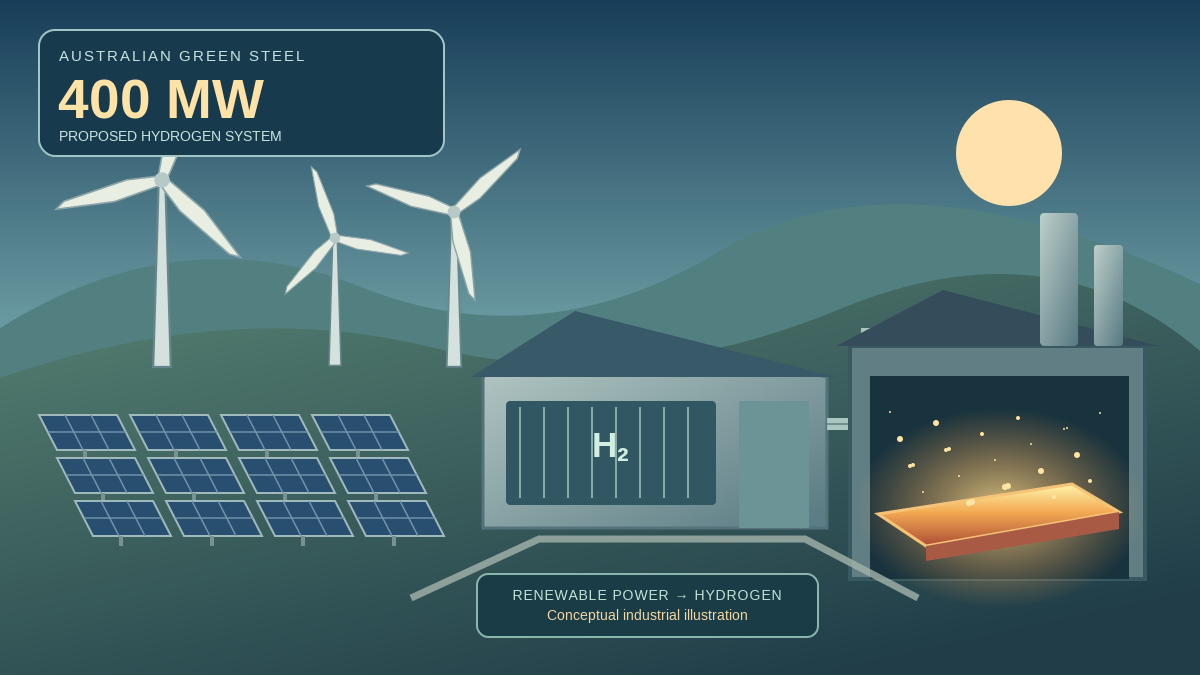
Greensteel Australia and Envision Energy announced a partnership on November 25 to investigate a renewable hydrogen system with an initial capacity of 400 megawatts in New South Wales. The companies will study the integration of hydrogen production, renewable power and industrial manufacturing. A location in regional NSW is being evaluated; the proposed investment remains subject to feasibility work and approvals.
The partnership is distinct from Greensteel's previously announced mill at the former BHP steelworks in Mayfield North, Newcastle. That initial project will use electricity to heat and process semi-finished steel into products for construction. The new proposal would extend production upstream into ironmaking using hydrogen and subsequent electric furnace steelmaking.
Two projects, two stages
Electric processing of semi-finished steel. Industry reporting puts the intended start in early 2028 and finished steel capacity at up to 600,000 tonnes annually.
Hydrogen-based direct reduction of iron ore and electric furnace steel production. An initial 400 MW hydrogen system is being explored.
Sources: Envision Energy, pv magazine Australia and Hydrogen Insight. The proposed hydrogen phase does not have a confirmed final investment decision.
Why hydrogen is relevant to steelmaking
Iron ore contains oxygen chemically bound to iron. Conventional primary ironmaking commonly uses carbon-based reducing agents to remove that oxygen, producing carbon dioxide. In hydrogen-based direct reduction, hydrogen can perform the chemical reduction, generating water instead. The resulting iron can then be melted in an electric arc furnace.
Electrolysis itself requires substantial electricity. For the overall route to deliver lower greenhouse gas emissions, the electricity supply, raw materials and other production steps matter. A plant powered by fossil-intensive electricity does not automatically become low-emissions simply because it uses hydrogen.
Calculator: estimate hydrogen electricity costs
This illustrative model treats the announced 400 MW as electrical input to an electrolyser for teaching purposes. The companies have not published a detailed equipment specification. The utilisation and electricity price defaults are hypothetical; 50 kWh/kg is an illustrative overall electricity requirement used in an IEA comparison.
Annual electricity input: 2,102,400 MWh
Annual hydrogen output: 42,048 tonnes
Annual electricity spending: A$126,144,000.00
Electricity cost per kg: A$3.00
Uses 8,760 hours in a non-leap year and a constant average energy requirement. Excludes equipment, water, maintenance, financing, storage, transport and other operating costs. Not a project output forecast or a levelised hydrogen price. Inputs are processed locally.
What happens when renewable electricity becomes expensive?
At 50 kWh per kilogram and an electricity price of A$60 per MWh, the electricity component alone costs A$3 per kilogram. At A$100 per MWh, that rises to A$5. The difference matters because a steelmaker must pay for the remaining equipment and production processes as well.
Lower utilisation reduces annual production. It does not alter the modeled electricity cost per kilogram at a fixed energy price and efficiency, but it may raise the cost of recovering the original capital investment per kilogram. A project therefore needs to balance inexpensive power with enough operating hours.
What to watch next
Look for a selected site, confirmed electricity supply arrangements, a detailed equipment capacity, an environmental approval pathway and a final investment decision. Those milestones will provide a much better basis for evaluating the proposal than a capacity announcement alone. The two companies will also examine possible local manufacturing opportunities for renewable infrastructure, but no final commercial arrangements for these were disclosed.
Sources & further reading
AI-assisted, source-based explainer. The company announcement was read directly; pv magazine coverage was available in search extracts but its direct page fetch failed. No plant design or site was independently inspected. The interactive calculations are illustrative, not a prediction of Greensteel's production or finances. See editorial standards for corrections.