Amazon Leo adds 36 satellites: how close is it to offering satellite internet?
Europe’s Ariane 6 delivered another batch of broadband satellites on 24 November. The successful mission moves Amazon’s network forward, but coverage, capacity and local availability remain separate challenges.
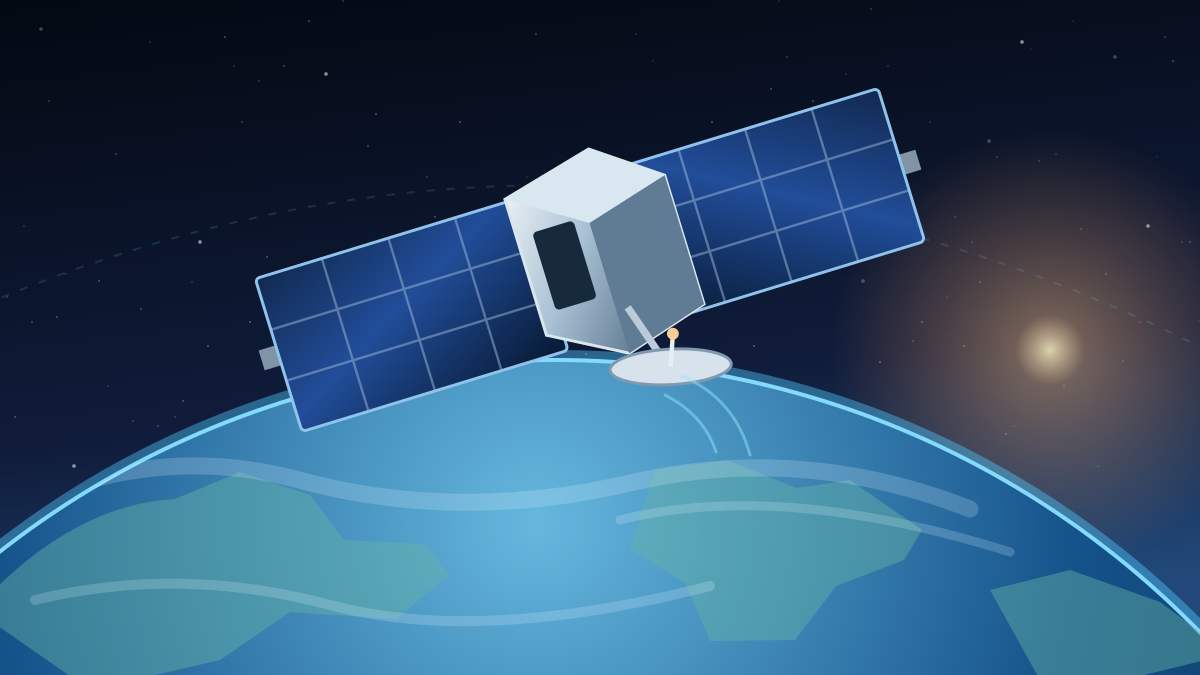
For a household beyond the reach of reliable fibre or mobile broadband, a satellite internet connection can offer an alternative to waiting for a new cable to be laid. Amazon is developing a network intended to serve such customers, and this week's European rocket flight has added another group of spacecraft to that effort.
On Tuesday, 24 November 2026, an Ariane 6 rocket lifted off from Kourou in French Guiana with 36 Amazon Leo satellites. Launch operator Arianespace confirmed successful deployment at roughly 460 kilometres above Earth. Amazon subsequently reported that its constellation had grown to more than 430 satellites.
The immediate significance is a successful addition to the network. The consumer significance is more complicated: more spacecraft create opportunities to extend coverage, but the number launched does not tell a household when it can order a connection.
Why the satellites need to keep moving
Traditional geostationary communications satellites orbit about 35,786 kilometres above the equator. They appear to stay in the same part of the sky as seen from Earth, so a fixed dish can point towards them. Low Earth orbit satellites travel much closer to the surface and move rapidly across the sky. A ground terminal must therefore communicate with different satellites as they pass overhead.
The shorter distance offers an advantage for latency, the time it takes for information to travel between endpoints. A voice call or an online game depends on timely responses, whereas a large file download also depends heavily on sustained throughput. Satellite internet providers need to address both.
Why orbit altitude is only part of the connection
Consider a simplified request to a website. A customer's terminal sends data to a satellite, which relays traffic towards the terrestrial network. The reply must make the journey back. In an idealised scenario with a satellite directly overhead and a nearby gateway, four vertical radio legs give a useful lower-bound comparison:
| Example orbit | Altitude | Four-leg minimum |
|---|---|---|
| Illustrative low orbit | 600 km | 8 ms |
| Geostationary orbit | 35,786 km | 477 ms |
These calculations are not measured Amazon Leo speeds. They ignore oblique paths, satellite-to-satellite links, processing, congestion and terrestrial routing. Real-world latency is higher than the idealised minimum. The example simply shows why distance can matter.
Why a successful launch does not mean instant coverage
After deployment, satellites must be checked, positioned and integrated into the network. Continuous coverage requires enough suitably distributed spacecraft so that another can take over as one moves out of view. The system also needs ground infrastructure, usable radio spectrum and customer equipment.
Capacity is a separate consideration. A satellite passing over a region has finite communications resources. If many households or businesses connect in the same area, their experience will depend on how the network allocates those resources. A national coverage announcement does not by itself guarantee the same performance at every address.
The challenge of securing enough launches
Arianespace says it has carried 136 Amazon Leo satellites on four missions this year, and Amazon has contracted 24 Ariane 6 flights in total. Independent reporting by Ars Technica describes pressure on Amazon's launch schedule following the loss of satellites aboard a Vulcan rocket earlier in November. Amazon is also bringing forward launches with SpaceX, whose Starlink network is a competitor to Leo.
This arrangement illustrates a distinction between the launch market and the broadband market. Companies can compete for internet subscribers while still supplying one another with launch services. For Amazon, having multiple providers can reduce dependence on a single rocket programme, although it cannot eliminate scheduling or production risks.
What prospective customers should look for
Before buying equipment or changing providers, households should check whether service is offered at their specific address, what installation requires, the monthly and upfront costs, and any usage or cancellation conditions. Advertised peak speeds should be considered alongside independent measurements of typical speeds and performance during busy periods.
People with an existing reliable fibre connection may have different priorities from those who cannot obtain usable fixed broadband. For the latter group, availability may matter more than a headline speed figure.
Amazon's initial network plan covers more than 3,000 spacecraft. The November launch advances that programme, but these sources do not establish a universal retail launch date or a price for every market. The most useful next milestones will be verified service availability, independently measured performance and transparent local pricing.
Sources & further reading
- Arianespace — mission VA271 results, 24 November
- CNES — launch confirmation
- Amazon — constellation progress, 24 November
- Ars Technica — independent reporting on launch-provider constraints
- Amazon — technical explanation of its satellite internet system
- Amazon — initial constellation and network infrastructure
AI-assisted, source-based explainer, not firsthand reporting. Published 25 November 2026. See editorial standards for corrections.